
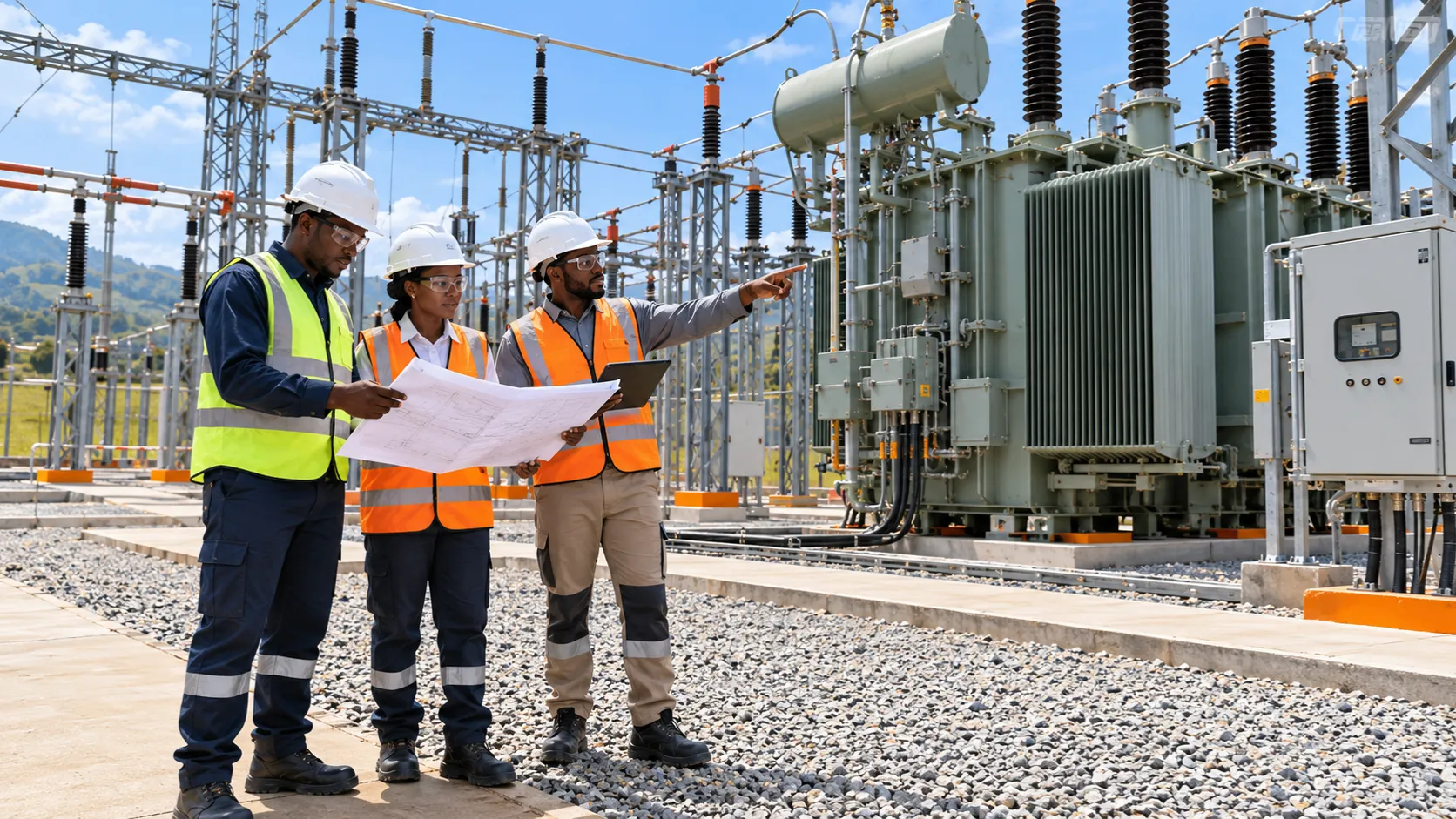
Substations are critical links between electricity supply and the facilities or communities that depend on it. When transformers, switchgear and protection systems become overloaded or obsolete, reliability and safety can deteriorate.
A successful substation upgrade in Africa requires more than replacing aging equipment. It must address current problems, projected demand, operational constraints and long-term maintenance.
Common reasons include:
These warning signs should trigger a structured technical assessment before equipment fails.
Begin by documenting the condition and performance of every critical asset.
The assessment may include:
Engineers should also verify drawings, equipment ratings and protection settings. Missing or outdated documentation can create significant design and construction risks.
The upgraded substation should support both current loads and realistic future growth.
Consider planned production expansion, new buildings, electric machinery, renewable-energy systems and expected customer connections. Load-flow, short-circuit and protection-coordination studies help determine the required transformer capacity, conductor ratings and fault-interruption capability.
Oversizing can waste capital, while undersizing may require another upgrade too soon.
The assessment and studies should produce a clear scope covering items such as:
Compatibility between new and retained equipment must be confirmed during design.
Many substations must remain partly operational during an upgrade. The contractor should develop a phased programme showing temporary supplies, isolation points, switching procedures and outage durations.
Long-lead equipment should be identified early. Transformers, switchgear and protection panels may require factory testing before shipment.
Every phase must follow approved safety procedures and clearly assign switching and authorization responsibilities.
Commissioning should verify that the complete system performs as designed.
Testing may include transformer checks, breaker timing, relay injection, interlock verification, earthing measurements, SCADA communication and functional trip tests. Operators should receive updated drawings, manuals, settings, training and maintenance schedules.
A single EPC partner can manage engineering, procurement, construction and commissioning under one accountable entity, reducing interface gaps between designers, suppliers and installers.
GEMIN supports substation and transformer projects across Tanzania and East Africa, with experience exceeding 200 transformer installations. Its coordinated EPC approach helps clients manage safety, quality, schedules and long-term support.
Request a Substation Assessment
GEMIN combines engineering expertise, technology partnerships and disciplined execution to deliver reliable infrastructure across energy and digital systems.